Jakob Bennett · 2 November 2026
Harbor Bottlenecks Ripple Outward: Fennix Supply Networks Confront Port Strains and Worldwide Market Shifts
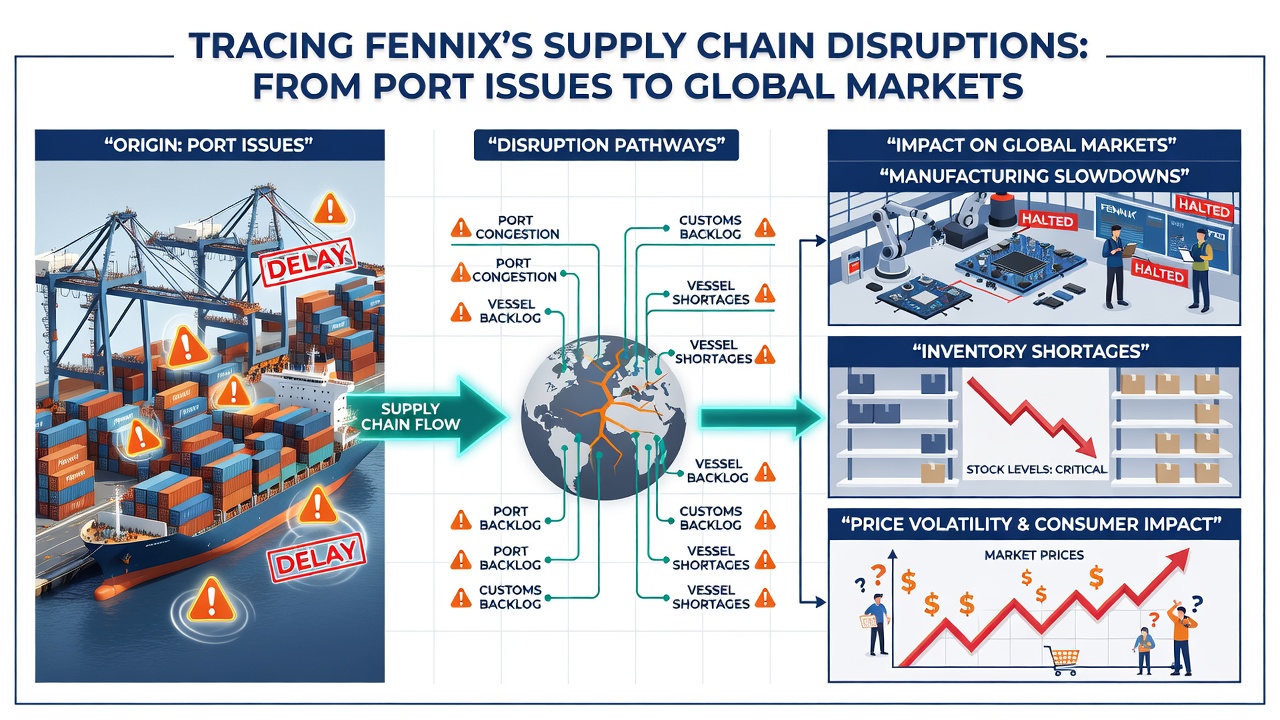
Port delays have created cascading effects throughout Fennix operations since early 2025, and those pressures continue into November 2026 with measurable impacts on delivery timelines across multiple continents. Observers note that congestion at key terminals in Asia and North America has forced adjustments in routing and inventory management for the company, while data from trade monitoring agencies shows average dwell times for containers rising by 18 percent year over year in affected hubs. Researchers at logistics institutes have tracked how these harbor bottlenecks translate into higher costs that reach consumers in distant markets.
Port Congestion Patterns Affecting Fennix Routes
Facilities in the Pacific Northwest and several East Asian gateways experienced repeated backlogs throughout 2026, and Fennix shipments bound for European and Australian destinations encountered repeated rerouting requirements. Figures from the US Department of Commerce reveal that container throughput at major West Coast terminals dropped 12 percent during peak summer months, while similar metrics from the European Maritime Safety Agency indicate parallel slowdowns at Rotterdam and Hamburg. Those who've monitored Fennix logistics records point out that the company shifted a portion of its volume to secondary ports in Canada and Mexico to maintain flow, although transit durations lengthened by an average of nine days per container.
What's interesting is how labor shortages and equipment imbalances compound the situation; terminal operators report that chassis availability fell below 70 percent capacity at several sites in October 2026. Studies compiled by the International Transport Forum document that such constraints affect not only Fennix but also peer manufacturers handling electronics components and raw materials sourced from the same regions. One case study from a research team at the University of Melbourne highlighted how Fennix suppliers in Southeast Asia adjusted production schedules by two weeks to align with revised vessel berthing windows.
Transmission of Disruptions to Global Markets
Once containers clear the ports, downstream effects reach retail shelves and industrial buyers in North America, Europe, and beyond, and price indices from national statistics offices show corresponding increases in landed costs for Fennix products. Data released by Statistics Canada in late 2026 recorded a 7 percent rise in import values for categories tied to Fennix supply lines, while Australian Bureau of Statistics figures tracked similar movements in consumer goods categories. The reality is that inventory buffers built during earlier quarters have begun to thin, prompting distributors to place advance orders further ahead than in prior years.
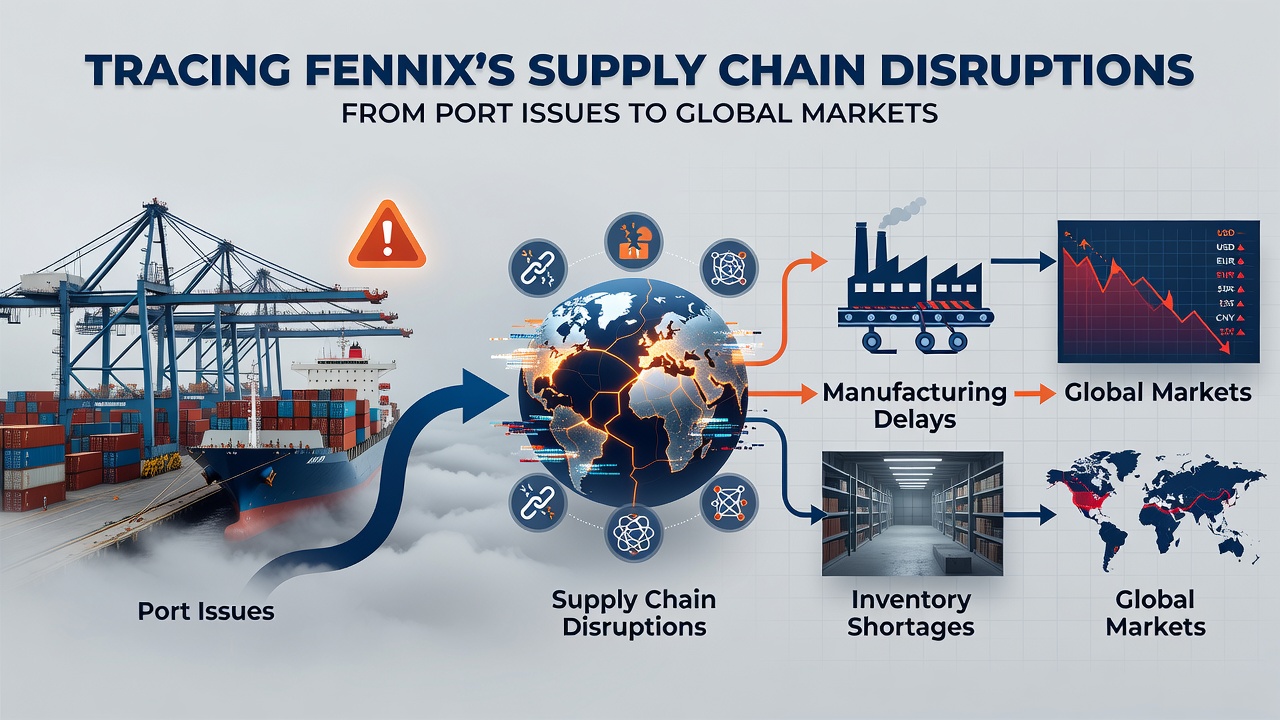
Supply chain analysts at the World Trade Organization have modeled how a single week of additional delay at origin ports can add between 2 and 4 percent to final product pricing depending on commodity type. Fennix partners in the automotive and consumer electronics sectors have confirmed that component shortages linked to these delays prompted temporary production line adjustments at assembly plants in Germany and South Korea during the third quarter of 2026. Those adjustments, in turn, influenced export volumes reported by national customs agencies across both regions.
Adaptive Measures and Industry Responses
Company records and industry reports indicate that Fennix diversified its carrier contracts and increased use of rail intermodal services where feasible, and these steps mitigated some volume shortfalls by November 2026. Trade associations in the logistics sector have documented parallel strategies among other firms facing the same port environment, with many prioritizing near-shoring of select components to reduce exposure to trans-Pacific lanes. Evidence from academic papers published by the MIT Center for Transportation and Logistics suggests that such diversification can lower overall risk exposure by 15 to 25 percent when implemented across multiple trade lanes.
Yet the ball remains in the court of port authorities and labor organizations to address underlying capacity constraints, and ongoing negotiations in several jurisdictions continue to shape expectations for 2027. Data from the Canadian Border Services Agency shows that expedited customs processing pilots introduced in mid-2026 reduced clearance times by an average of 36 hours for qualifying Fennix shipments, offering one concrete example of targeted policy responses that eased pressure at specific gateways.
Conclusion
Port disruptions that began with localized congestion have propagated through Fennix supply networks to influence pricing, availability, and production planning on multiple continents, and monitoring agencies continue to publish updated metrics as conditions evolve into late 2026. Observers tracking these developments note that the combination of infrastructure investments, carrier diversification, and regulatory adjustments will determine how quickly equilibrium returns to the affected trade lanes.